
Religious Education
Intent
Through our RE curriculum, we want children to know more, understand more and remember more about the deep roots and wisdom that religions and different world views offer, the ways in which they talk about living well together and the answers that they give to life’s big questions.
In addition, we want to prepare them for the diverse landscape of modern Britain: welcoming those of all faiths and none. As they progress through the school, the children receive a rich diet of teaching, visitor experiences, music and worship to inspire and uplift them. We provide our children with opportunities to learn about and from religions and different world views in local, national and global contexts, to discover, explore and consider different answers to these questions. Through our curriculum, we intend for them to be equipped with systematic knowledge and understanding of a range of religions and worldviews, enabling them to develop their ideas, values and identities.
As a Church of England school, we don't just want Religious Education to be confined to the classroom! We want it to be part of the fabric of everyday life at Ruswarp. Our values of Forgiveness, Respect, Kindness, Friendship and Thankfulness are part of everything we do e.g. providing help to our youngest children, showing forgiveness to others following disagreements or persevering with things even when they are challenging. These values are not only expected from the children but are also modelled by staff.
Our intent for RE comes from our school vision:
Think for Yourself and Act for Others
As a Church of England school, we seek to follow the Church of England’s Statement of Entitlement for Religious Education. It says: The aims of Religious Education in Church schools are:
- To enable pupils to know about and understand Christianity as a living faith that influences the lives of people worldwide and as the religion that has most shaped British culture and heritage.
- To enable pupils to know and understand about other major world religions and world views, their impact on society, culture and the wider world, enabling pupils to express ideas and insights.
- To contribute to the development of pupils’ own spiritual/philosophical convictions, exploring and enriching their own beliefs and values.
Implementation
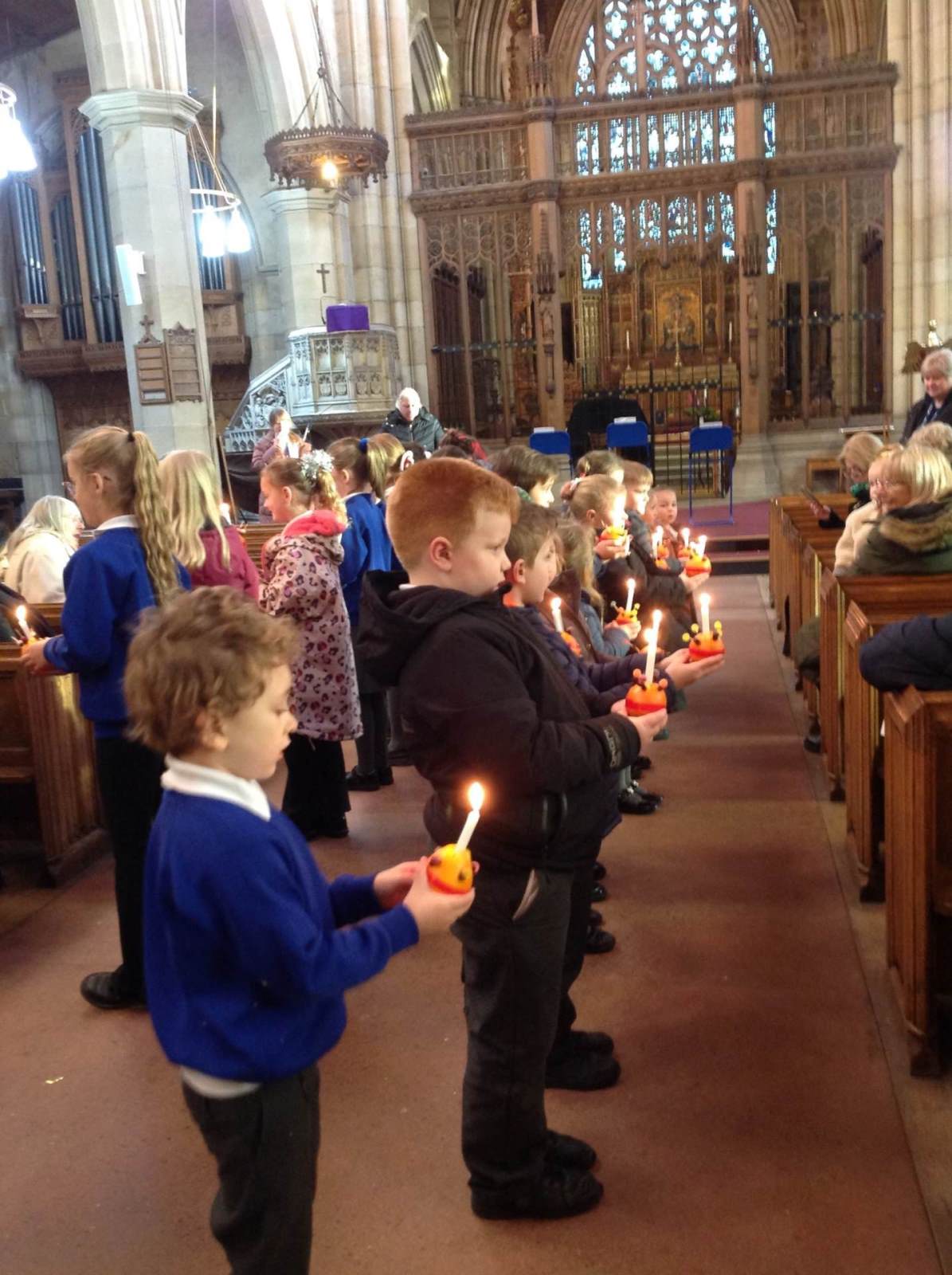
Each term, a specific Christian value is explored and celebrated. Significant local, national and international events are marked, and children create and lead their own collective worships. The school, although grounded in its Christian heritage, is a solace for those of all faiths and none.
What do we teach in RE?
In RE we aim to give children a grounded understanding of Christianity and the major world faiths. As the children progress through the school, they will learn about different religions and worldviews. In Key Stage One, children will learn about Christianity, Judaism and Islam. In Key Stage Two, children will revisit these religions, but also encounter Hinduism and non-religious views, such as Humanism. See our progression document below for more details.
An important aim of RE is that children are encouraged to reflect on their learning and make their own decisions about what they believe. The aim of RE is not to make children into religious believers, but to understand that religion still influences and sustains many people in the world today, and to consider the wisdom of faith traditions, and reflect on what they might take from it. Our teaching is rooted in the Church of England, but we provide a space for all children to express their home religion, or for those of no faith. Our curriculum follows the North Yorkshire syllabus and is enhanced through the Understanding Christianity resources (for our teaching of Christianity).
We have actively chosen to use this substantial resource that supports the teaching of Christianity in Religious Education. The key purpose of this project is to help all teachers support pupils in developing their own thinking and their understanding of Christianity, as a contribution to their understanding of the world and their own experience within it.How do we teach RE?
Children aim to answer a ‘big question’ through following an enquiry over a term. This will involve learning about what a faith might say, investigating it further and analysing. Finally, children will reflect on what they might feel is their personal response to the big question. Religious Education at Ruswarp may be taught through Art, Drama, Storytelling and investigating artefacts. We are fortunate to have an excellent set of artefacts to use in class. We encourage children to develop a knowledge of the rich tradition of religious art and music; responding and reflecting on what they may learn from it. We try to bring in visitors and take children out to experience religion in the real world. For example, we welcomed a special guest, Yazi, to our school, to help us understand some of the cultural traditions associated with Islam. We had an opportunity to explore Islamic art, which inspired us to create our own designs.
Above all, we believe that the Christian values underpinning our education will enable all children to become confident, reflective, spiritual and morally aware people who can play a role in shaping modern Britain.
You can read more about RE at Ruswarp by clicking the link below:
North Yorkshire Agreed Syllabus